
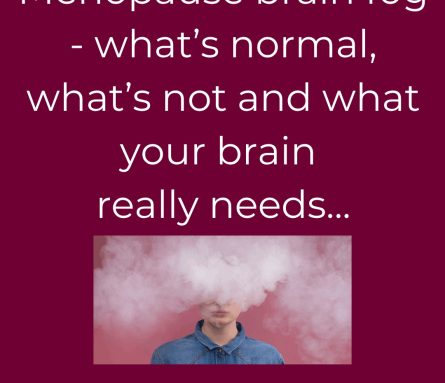
Ever walked into a room and forgotten why you went in there? Lost a word mid-sentence? Read the same paragraph three times and still not taken it in?
And then wondered “Am I getting dementia?”
It's a question many women quietly ask themselves during perimenopause and menopause.
I know how unsettling it can be. I've experienced brain fog myself, and when your brain doesn't seem to be working like it used to, it can knock your confidence and leave you feeling less capable than the woman you know yourself to be.
But let's separate the facts from the fear.
What's Normal?
Brain fog is a recognised symptom of the menopause transition. Some women notice changes in memory, concentration, word-finding and mental clarity.
Research from the long-running US SWAN study found changes in some aspects of cognitive performance during perimenopause, which for many women improved once hormones had settled.
Fluctuating hormones are part of the picture. Oestrogen influences several processes involved in brain function, including memory, attention and energy metabolism. But it's not just hormones. Poor sleep, night sweats, stress and low mood can all make the brain fog feel worse.
What's Not?
Menopause brain fog doesn't automatically mean you're developing dementia. But neither should every memory problem in midlife be dismissed as “just hormones”.
If cognitive changes are persistent, worsening, interfering with daily life or concerning you, speak to your GP. There may be other contributing factors worth investigating, including thyroid problems, vitamin B12 deficiency, sleep disorders or medication effects.
What Your Brain Really Needs
Here's where we can do more than simply wait for the fog to lift. Your brain needs the right foundations to function well today and to support healthy ageing in the years ahead.
🥩 Enough protein to maintain muscle, bone and support healthy ageing.
🐟 Omega-3 fats from foods such as oily fish.
🥦 A diverse, colourful, fibre-rich diet to support your gut microbiome and overall metabolic health.
🏋️♀️ Regular movement and strength training to support cardiovascular and metabolic health.
😴 Good-quality sleep to support attention, memory and daytime functioning.
❤️ Healthy blood pressure and blood glucose - because brain health and metabolic health are closely connected.
None of these is a magic bullet and no diet or supplement can guarantee that you won't develop dementia. But research does suggest that it is largely a preventable condition.
Your brain health deserves attention long before old age.
Menopause may be the moment you first notice changes in how your brain feels. It can also be an opportunity to look at the bigger picture: how you're eating, sleeping, moving and supporting your brain for the decades ahead.
Brain fog may be the symptom that gets your attention. Your long-term brain health is the bigger picture.
If you'd like support in managing menopause brain fog and other symptoms, my 12-week personalised nutrition programme The Menopause Method could be for you - why not get in touch to arrange a free, exploratory conversation - no obligation at all!