
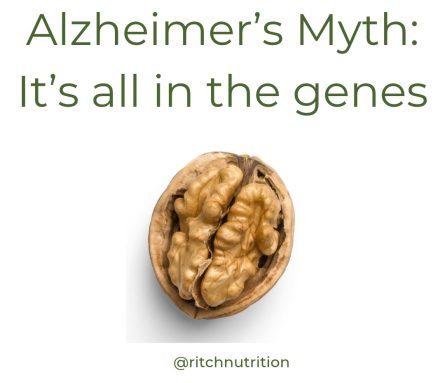
A diagnosis of Alzheimer’s is one of the most feared. And where there is fear, myths flourish.
I hear the same three over and over:
❌ It’s purely genetic
❌ It’s an inevitable part of ageing
❌ Our only hope is new drugs targeting amyloid
The reality is far more hopeful, and it doesn’t get talked about enough.
The genetics, in perspective:
🔹 Fewer than 1% of cases are caused by rare, deterministic gene mutations that lead to early-onset familial Alzheimer’s.
🔹 The vast majority are late-onset and multifactorial, which means risk is shaped by many factors across a lifetime.
What about APOE4?
APOE is a gene that helps transport fats and cholesterol, including in the brain. We all carry two copies, in three main versions: E2, E3 and E4. E3 is the most common, and roughly 1 in 4 peo-ple carry at least one E4.
APOE4 is the strongest known genetic risk factor for late-onset Alzheimer’s. Risk is higher with one copy, and higher again with two.
But it is a risk factor, not a diagnosis. Many people with APOE4 never develop dementia, and many people who develop dementia don’t carry it.
Your genes load the gun. They don't pull the trigger.
Research suggests that a large percentage of our dementia risk is linked to factors we can influ-ence, including blood pressure, blood sugar, physical activity, sleep, diet, alcohol and social connection.
Knowing your genes can be useful, but your daily habits are where you have the most control.
Want to know where you stand?
Download my free Brain Health Scorecard to see which factors make a difference and assess where you are right now. Visit www.ritchnutrition.com/scorecard/