
Hormones don't just appear and disappear. They have an entire lifecycle that involves:
✔️ Production
✔️ Transport around the body
✔️ Activation within cells
✔️ Metabolism
✔️ Elimination
Every single stage depends on having the right nutrients and healthy body systems to function effectively.
In my two previous blogs, I covered production, transport, and activation. This blog covers metabolism - what happens once a hormone has done its work.
Once a hormone has been used by your body, it doesn't just vanish. It needs to be broken down (metabolised) so it can safely be removed.
Metabolism
Your liver does most of the heavy lifting here, converting hormones into forms your body can safely get rid of.
This happens in two phases, and both need specific nutrients to run properly - including specific amino acids glycine, taurine and cysteine derived from protein; B vitamins (found in eggs, poultry, legumes and wholegrains); and magnesium (pumpkin seeds, almonds, spinach and dark chocolate).
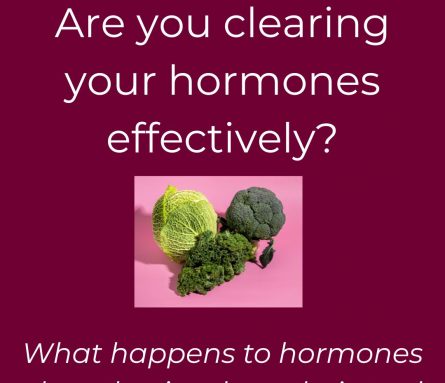
This is where cruciferous vegetables come into their own. Broccoli, cauliflower, kale, Brussels sprouts, and cabbage are not only packed with nutrients and antioxidants, but they also contain a compound called Indole-3-Carbinol, which specifically supports how your liver clears oestrogen from the body.
Few foods are as directly linked to healthy oestrogen metabolism as this vegetable family.
Why this matters
If metabolism is sluggish - from an overburdened liver, an unhealthy gut or a nutrient-poor diet - hormones aren't broken down properly, which sets up problems for the next stage in the process: elimination.
A simple step you can take to support the metabolisms stage is to add cruciferous vegetables to your plate a few times a week. Green tea can also be helpful.
Even if your body is producing and transporting hormones well, a bottle-neck here means they can't be cleared efficiently.
A simple step to support this stage is to add cruciferous vegetables to your plate as often as you can.
Watch out for my next and final blog n this series on elimination - how hormones actually leave the body.