
Nobody tells you this about your bones.
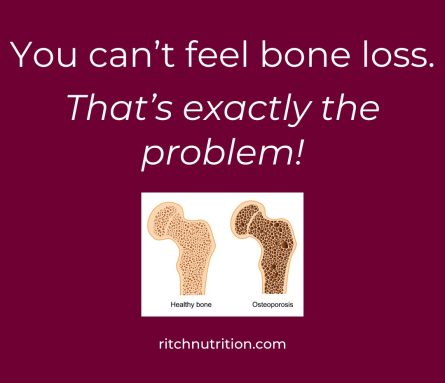
You can't feel bone loss. There's no ache, no warning and no symptom. Osteoporosis often goes unnoticed until a bone breaks, and by then a lot of the groundwork has already been laid.
I know, because it happened to me. In 2021, a scan told me I had osteoporosis. It came as a complete surprise. I'm a nutritional therapist and I still hadn't seen it coming. That's how quietly it happens and it's why I want more women to hear this before they suffer a fracture.
My own scans have improved since then, which is good news and means that midlife isn't too late to act. It's a window of opportunity.
Why menopause matters for your bones
Your skeleton isn't fixed. Bone is living tissue that is constantly being broken down and rebuilt. Oestrogen helps keep that balance steady. Around the menopause, as oestrogen falls, bone breakdown can start to outpace rebuilding, and bone loss speeds up.
This doesn't happen to everyone in the same way. Family history, body weight, smoking, alcohol, certain medications, thyroid problems and how early menopause arrives all play a part. That's why a personalised look at your own picture beats generic advice.
Three things worth doing now
1. Eat enough protein, and spread it through the day
Bone isn't just calcium. It has a protein framework, mostly collagen which minerals build on. Many women eat too little protein, particularly at breakfast and lunch. Aiming to include a good source at each meal, such as eggs, fish, poultry, dairy, tofu, beans or lentils, is a sensible place to start. How much you need is individual, which is where a proper assessment helps.
2. Lift something heavy, and add some impact
Bones respond to load. Strength training and where appropriate, impact exercise send bones a signal to stay strong. Start gradually and build up. If you already have a diagnosis of osteoporosis, a previous fracture or a high fracture risk, check with your GP or a physiotherapist before starting heavy lifting or high-impact work, to ensure the exercise is right for you. And if you're new to lifting weights always work with a qualified PT to ensure good form.
3. Get the bone-supporting nutrients, food first
Calcium, vitamin D, vitamin K2, boron and magnesium all play a role in normal bone maintenance. Food should come first: dairy or fortified alternatives, tinned fish with bones, leafy greens, nuts and seeds. Vitamin D is the tricky one in the UK, because sunlight is too weak over autumn and winter for your skin to make enough. Current national guidance suggests many people consider a supplement during these months, so check what's right for you. How much you supplement depends on how high or low your current level is - it's always worth testing vitamin D before you start.
When to speak to your GP
Nutrition and lifestyle are powerful, but they don't replace medical assessment. Speak to your GP about bone health if you have a previous fracture, a family history of osteoporosis, early menopause, long-term steroid use or other risk factors. A bone density (DEXA) scan can show where you stand, and your GP can advise on whether you need further investigation or treatment.
Where to start
If you'd like a clear, personalised plan of action. Get in touch with me.